
 Lost/Found
 How It Works
 Join/Login

How to Check If a Found Dog Has an Owner
How to Check If a Found Dog Has an Owner

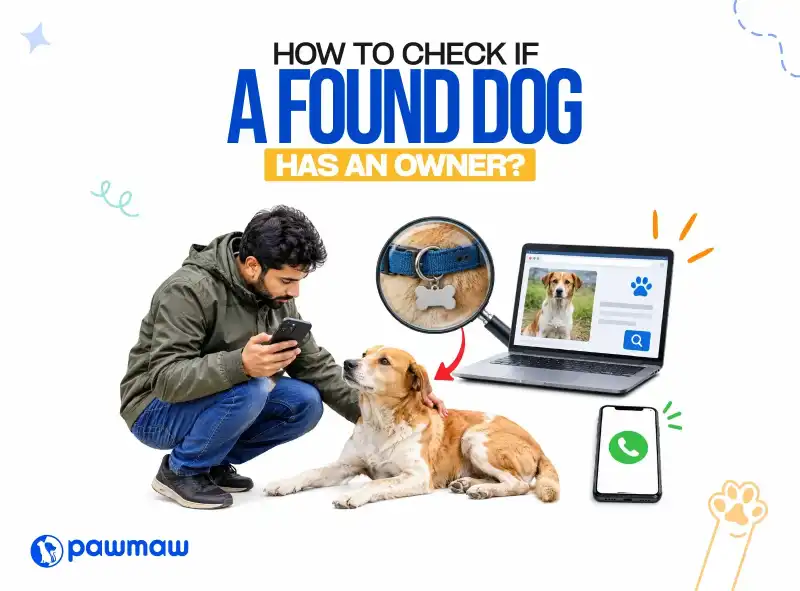
How to check if a found dog has an owner or not? It's pretty simple: check the ID tag on the collar, or scan the microchip. Check if there is any missing dog report at a nearby animal rescue centre!
When you see a dog moving here and there, it might be eagerly searching for its family. Before you declare it a stray dog, you can take a few simple steps to find out if it has an owner or not.
However, let's read the details of what steps you can take to check whether a found dog has an owner or not!
What Should You Do First When You Find a Dog?
At first, when you see such a dog moving beside you, don't scold or chase it. Rather, take the dog safely to a side corner and check whether it has an identification tag on its collar or not. After that, see if there is a microchip. Scan the chip at an authorised scanning place and get the owner's contact number.
During this identification process, ensure the dog is feeling safe. Keep the dog safe from heavy traffic, aggressive animals, or other immediate dangers.
Especially if the dog is aggressive or too scared, do not try to handle it. Rather, contact the nearby animal rescue centre, vet, or other animal control authorities.
If the dog is injured, do the same: contact the nearby animal rescue or animal care organisation. Once the dog is feeling okay, check its collar, tags, and other visible identification.
7 Steps to Check If a Found Dog Has an Owner
Just follow a few steps. You can be sure whether the dog in front of you has an owner or not. Before going into the details, let me inform you about the most important action you should take with any found dog. Take a few pictures and videos of that dog from different angles, and note down a few basic observations as well.
Well, you can post on social media about this dog if it doesn't have an identification chip or tag.
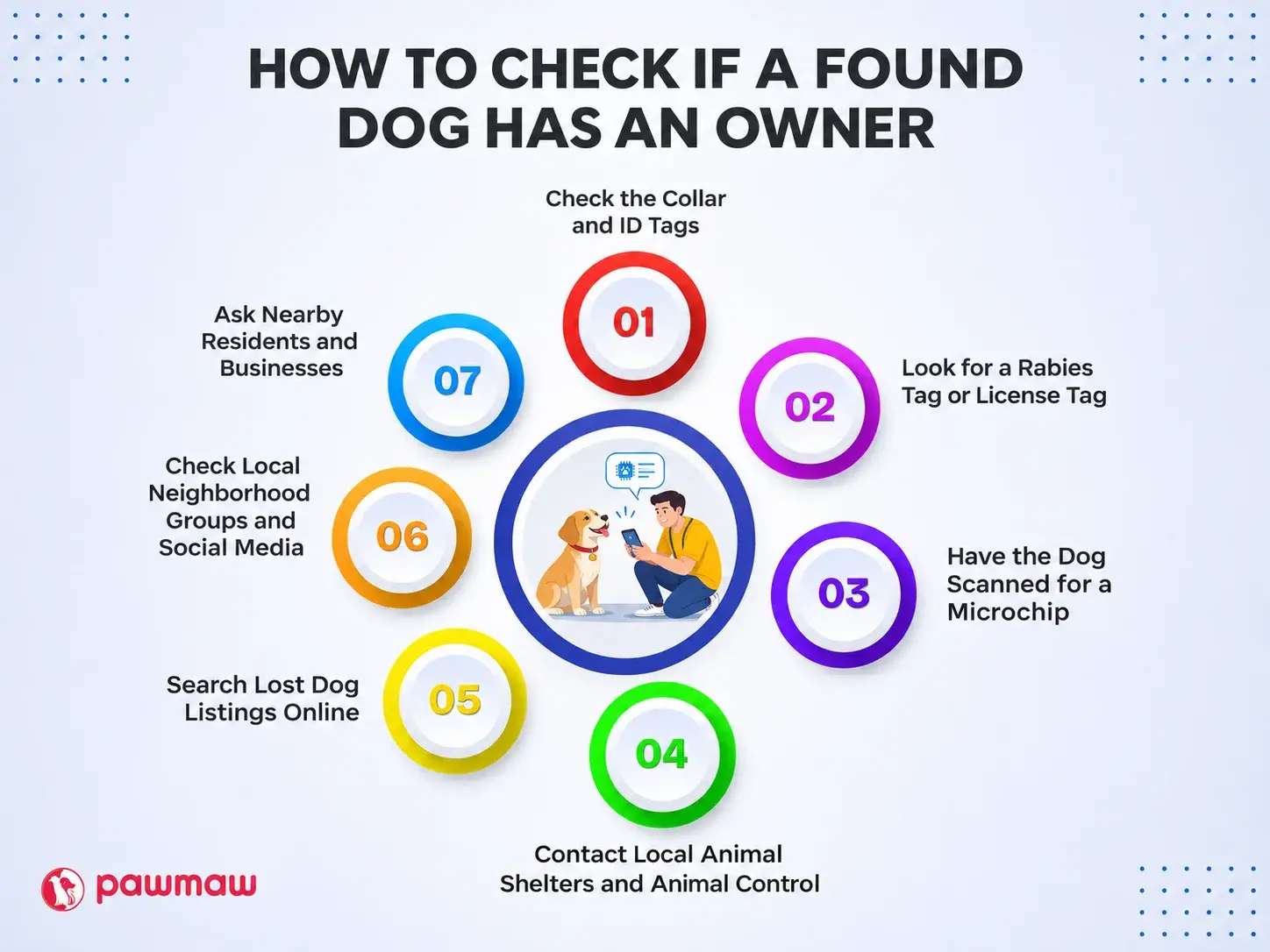
1. Check the Collar and ID Tags
When you find a lost dog, start by checking its collar and ID tags for a name, phone number, address, or other identifying details. Some dogs have the identification on their neck collar; again, some may have their identification tag on the back side (too rare). So if you found the owner's contact number, directly make the call and say where you found the dog. Don't share too much information publicly; instead, send the owner a picture of the dog. And tell him/her to take necessary action as early as possible.
2. Look for a Rabies Tag or License Tag
Well, look for a rabies tag or licence tag on the dog if you do not find the registered microchip or an identification collar tag. A rabies tag or a licence tag helps you get direct contact with a veterinary clinic or local registration system. A rabies tag always has a contact number or the address of the veterinary clinic that issues it. Again, the licence tag lets you get the authority where that dog was registered before.
Contact the clinic or authority and give the registration number you found on the tag. They may be able to contact the registered owner or tell you what steps to follow.
3. Have the Dog Scanned for a Microchip
You might not have a microchip scanner. Take the initiative to scan the dog to see the details on its microchip. You can contact veterinary clinics, animal shelters, and animal control facilities, because they most often have microchip scanners.
A microchip does not work like a GPS tracker, but it can help you find a lost dog's owner by providing an identification number that a shelter or veterinary clinic can check against a pet registry.
4. Contact Local Animal Shelters and Animal Control
If you cannot trace the owner, deciding where to take a lost dog usually starts with contacting nearby animal shelters, animal control centers, or veterinary clinics. This is because the owner may already have made a missing report to such a nearby centre.
Give them every possible detail of that dog, like the dog's breed or appearance, color, sex, approximate size, location found, and any physical identification mark found on the body.
Also inform the rescue staff if the dog is too scared, aggressive, or injured.
However, once you have given all those descriptions, ask them whether they have any missing reports according to these descriptions or not. To make the whole thing efficient, you can also share a recent photo or live video with the staff so that they can compare the dog with recent lost-pet reports.
5. Search Lost Dog Listings Online
In the above section, we already told you about sharing a dog-finding post on your social media. However, you should also search online to see whether anybody has posted a missing post about the same dog as you have. Search using the keywords ‘missing dog’, ‘lost dog listing ’, and also include the nearby area after the keywords.
Search using the area where you have found the dog. Check several lost pet websites, local community pages, and recent missing-dog listings instead of relying on a single source. Search more than once; carefully look at the newest post. Also check one or two days older dog missing posts. Some dogs may have been missing for long days; that's why it's also mandatory to see the older missing posts too.
6. Check Local Neighborhood Groups and Social Media
You can use Facebook to find a lost pet by checking neighborhood groups, community pages, local lost-and-found groups, and recent missing-dog posts from the area where you found the dog.
However, when you make a found dog post, include a few general details of the dog, including a clear photo, any identical body marks, and your contact details. Do not share too much of the details of that dog, because sometimes you may face a scam owner claiming in that case. Let the real owner give you every detail to confirm he/she is the real owner.
7. Ask Nearby Residents and Businesses
Nearby residents and businesses are also important places where you may find news about the owner of that lost dog. Better, you show a photo of that dog to the nearby resident or shop owner; they may tell you where this dog lives. You may also ask the security guards, delivery workers, or other mobile businesses about the dog, whether they know it or not.
Though you may think this way is not that efficient, the dog may have gone missing from the nearby area, and it is still staying close to the owner's area.
How to Verify Someone Claiming to Be the Dog’s Owner
Only the real owner could give you the authentic description of the found dog. So ask for the details if anybody is claiming that the dog is hers/hims. Only the collar ID tag is not sufficient. Because this tag can be tampered with anywhere by anybody. That's why you have to ask for real proof. And you must undergo several identification processes to confirm the dog is going back to its real owner.
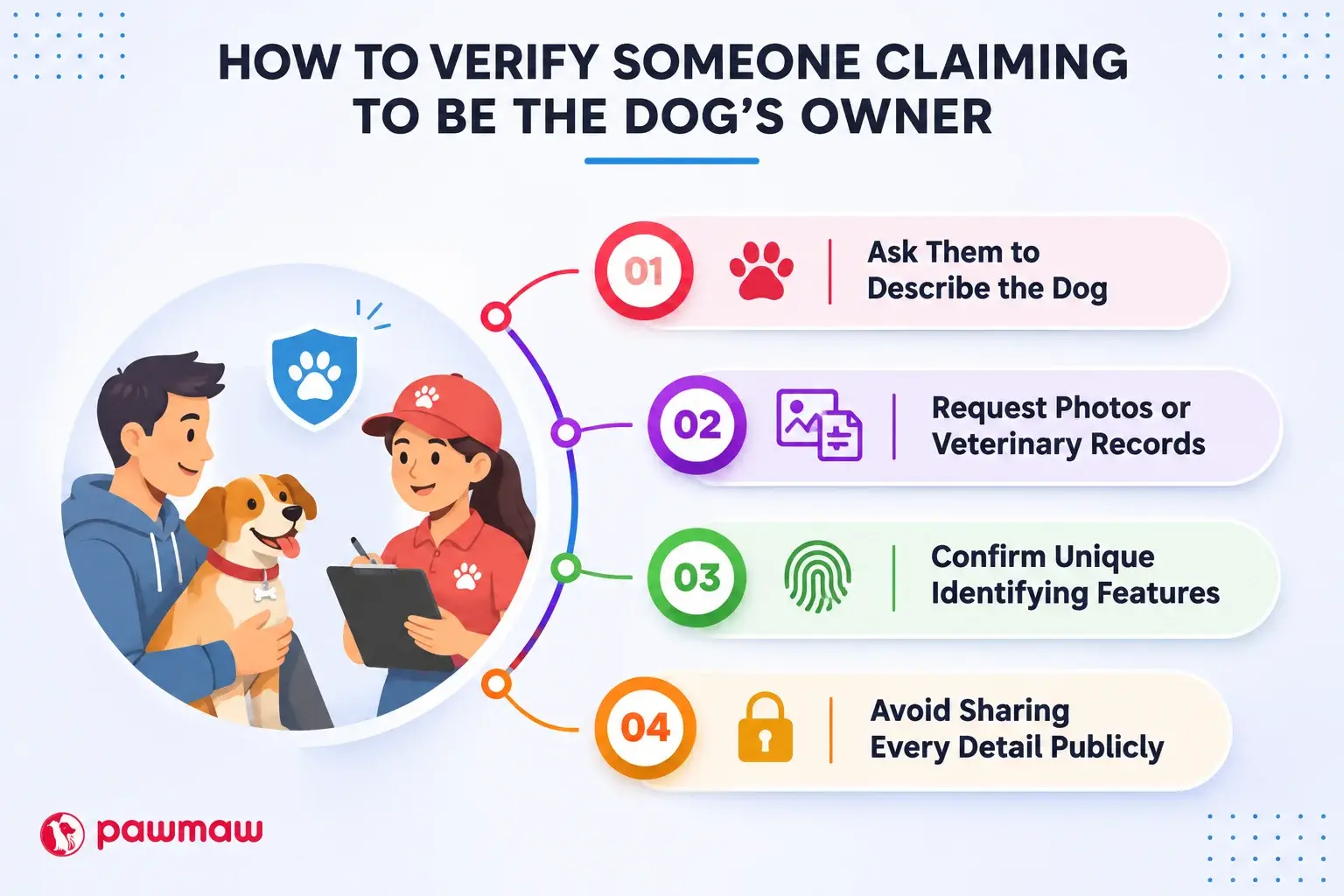
Ask Them to Describe the Dog
Ask them to say the dog's sex, breed, size, eye color, fur type, name, age, and personality type. Also ask them if the dog has any identical body marks. When they say these to you, match those descriptions with the dog carefully. Better, you do not give them any answer related to the dog's identity; let them share those. Also, you can ask them about the found dog’s favourite food, specific behaviour, etc.
Request Photos or Veterinary Records
You can request a few photos and videos from the person if anybody is claiming this dog. Also, you can ask for the veterinary records and vaccination card as proof of ownership. A genuine owner, of course, will have such records. And when they show you all records, carefully review the photos and match the dog's appearance and identifying details.
Confirm Unique Identifying Features
Ask them if their dog has any unique identifying features that make the dog different even in the mess. Unique identifying features mean a specific marking, scar, birthmark, unusual coat pattern, or other physical feature. If the dog has a microchip, ask them to give the relevant information so that you can check the information through an appropriate clinic, shelter, or registry.
Avoid Sharing Every Detail Publicly
To avoid a lost pet scam, keep some identifying details private and ask anyone claiming ownership to describe those features before you reveal them. However, when anybody claims ownership, ask for a specific scar or unique mark at first. If the dog really has any such mark, and if that person can tell you the truth, that means he/she is the real owner.
What If You Cannot Find the Dog’s Owner?
If you still cannot find the owner, follow a clear found pet guide while keeping the dog safe and continuing to check shelters, lost-dog listings, and local community reports. Although you may already have gone through checking identification and local lost-dog reports, if you didn't find the owner, well, you may keep searching for a little more.
Otherwise, you can contact nearby shelters, animal control, veterinary clinics, and rescue organizations and provide them with the dog's details. As we told you, going through lost-pet listings and local community websites, or using their new pet listing group on Facebook. Okay, you can continue with this more.
If you still cannot keep the dog with you, you can directly hand over the dog to a local shelter or reputable rescue organization for safe temporary care. Before returning a found pet, verify the claimant's identity with photos, veterinary records, microchip details, or identifying features that were not shared publicly.
When you want to keep the found dog with you permanently, you have to follow the local rules and regulations for the adoption process first. The ASPCA explains that“people who find stray/lost animals should follow local laws regarding reporting, identification checks, and temporary care. It also emphasizes following established procedures before animals are rehomed or adopted.”
Use PawMaw to Find the Dog’s Owner
Create a found dog report with a clear photo, the location where you found the dog, its size, color, breed, and other visible details. Keep checking for possible matches while verifying every ownership claim before returning the dog.
Frequently Asked Questions
How can I tell if a found dog belongs to someone?
First, see whether this dog has a collar ID with identification information. Then search for a microchip. Most often, a pet dog may have these two items: a collar ID tag and a microchip.
Where can I get a found dog scanned for a microchip?
Usually, a veterinary clinic, animal shelter, or animal control facility scans the dog's microchip. So when you take your dog there, they can easily scan the microchip. And can get the owner's details easily then. I mean, the staff will scan the microchip and will tell you how to contact the registered number they found on the chip.
Is a microchip enough to identify a dog’s owner?
Sometimes the microchip can only show you the way to contact the real owner of your found dog. But if the microchip has the registered and updated contact info of the owner, only in that case can you identify the dog’s owner. Also, whether the owner picks up the phone or not is also a matter.
Should I post a photo of a found dog online?
Yes, of course! Posting a photo of a found dog online can help you find the found dog's owner. But when you post, do not share too much personal identification of that dog. Let the real owner share all personal identification for that dog so that you can avoid the scam owner.
How long should I look for a dog's owner?
Until you can arrange a safe shelter for that dog! Look, there is no clear timeline for how long you should look for the owner, because the situation may vary; thus, the waiting period as well. So if you are unable to hold the dog to you, hand over the dog to the nearby animal rescue shelter.
Can I keep a dog if I cannot find the owner?
Never make any assumption that you can keep the dog, as you are not finding its owner! Local laws may require you to report or surrender a found animal. If you are keen to keep the dog, contact a nearby animal control center or a local shelter to know details about the process.
Conclusion
Finding a dog's owner is not a one-minute job! Rather, it starts with checking its collar, ID tags, and microchip. Contact local shelters, search lost-dog listings, and ask nearby residents for information. Even more, to prevent any scamming, you have to ensure the claimant’s identity before you hand over the dog.
If you still cannot find the owner, arrange safe temporary care through a reputable shelter or rescue organization. Whatever you do, ensure you have kept the dog safe and secured!

Categories
- All Post

- Lost & Found Pet Tips
- Pet Behavior
- Pet Training
- Pet Food
- Pet Health
- Pet Care
- Pet Safety
- Others

 Pawmaw
Get Your Pet Back Home
Over 10 million dogs and cats are lost or stolen every year. You can report your missing pets with PawMaw.



 Pawmaw
How to Check If a Found Cat Has an Owner
Learn how to check for an owner using ID tags, microchips, local shelters, and online resources. Follow simple steps to help reunite a lost cat with i...
 Pawmaw
How to Search Shelters for a Lost Pet!
Contact nearby animal shelters, share your pet’s photo and details, check intake records, and visit regularly. Expand your search to neighboring shelt...
 Pawmaw
How to Use Neighborhood Groups to Find a Lost Pet
Post your pet’s photo and last-seen location in local Facebook, Nextdoor, and lost-pet groups. Ask residents to report sightings and share your post.
Share:


Leave a Reply
Get Your Pet Back Home
Over 10 million dogs and cats are lost or stolen every year. You can report your missing pets with PawMaw. We can notify thousands nearby within a minute.


PawMaw is actively helping to search for your lost pets in your local area. Report your lost/found pets here and send a free alert instantly.